
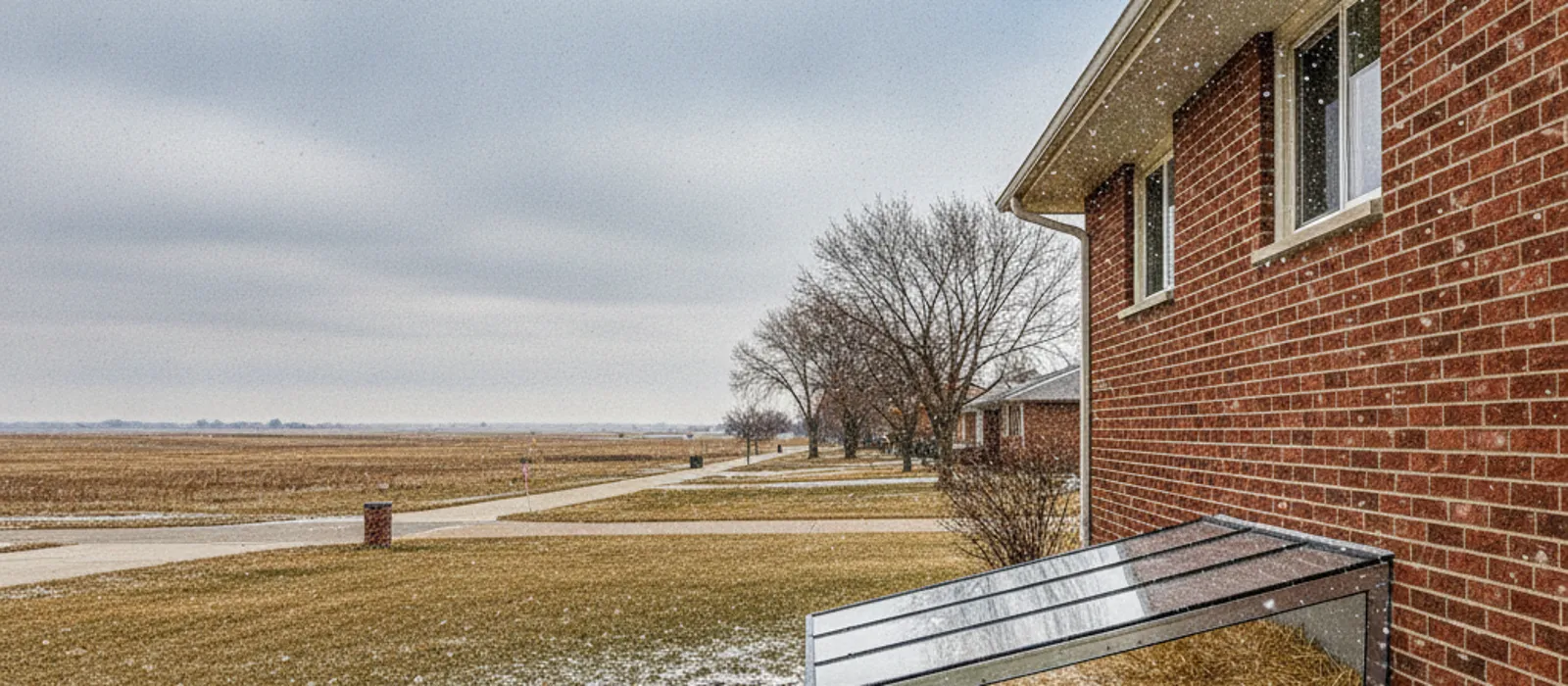
Your furnace runs every twenty minutes and the basement bedroom still feels like a walk-in cooler. Before you blame the ductwork, check the egress window. A drafty frame, a cracked well cover, or a clogged drain can undo a whole winter’s worth of heating and set you up for water damage when the spring thaw hits.
These egress window winterization tips are built for Lincoln and Southeast Nebraska homes, where temperatures swing from 50 degrees to below zero in the same week. Freeze-thaw cycles are hard on window wells, and a few hours of prep in October or November saves real money by February. We’ll walk through sealing, well covers, drainage, and the point where you should stop and call a professional instead of pushing a DIY fix too far.
If you’re already noticing cold air around your basement window or standing water in the well, don’t wait for the first hard freeze. Call (402) 261-0485 or reach our team for a free written estimate before the ground locks up.
Why Egress Windows Are Your Basement’s Weak Point in Winter
An egress window is a bigger opening than a standard basement window, and it sits mostly below grade, surrounded by soil that holds moisture. That combination makes it one of the most common spots for heat loss and water intrusion in a Nebraska basement.
Three things happen in a Lincoln winter that don’t happen as much in other seasons:
- Frost heave shifts the soil around the window well, which can crack seals and shift covers out of place.
- Freeze-thaw cycling turns small drainage problems into cracked concrete or a bowing well wall by spring.
- Condensation builds up on cold glass and metal frames, which can lead to mold if it’s not managed.
None of these are dramatic on day one. They show up as a slightly colder room, a musty smell, or a $40 bump in your gas bill. Catching them early is a lot cheaper than catching them in April when the well is full of meltwater.
Egress Window Winterization Tips That Start With the Well
Most winterization advice focuses on the window itself, but the well around it does as much work protecting your basement as the glass does. If the well isn’t ready for winter, the window can’t be either.
Check the cover first. A cracked or warped window well cover lets snow and rain sit against the frame instead of shedding away. Covers typically run $150 to $600 depending on size and material, and a replacement is one of the cheapest ways to head off a bigger repair. If yours has visible cracks or doesn’t sit flush anymore, this is the year to swap it.
Clear the drain. Every window well should have a gravel base and a drain that ties into your foundation drainage or daylights away from the house. Leaves, mulch, and dirt clog that path fast, especially in the fall. A clogged drain means water pools right at the base of your window and freezes solid, which puts pressure on the frame and the well wall. If you haven’t cleaned it out since summer, do it before the first freeze, not after.
Look at the wall itself. Corrugated steel and older galvanized wells rust and bow under years of freeze-thaw pressure. If you see rust streaks, gaps at the seams, or a wall that’s starting to lean inward, that’s not a winterization task anymore, it’s a replacement conversation. We cover the signs in more detail in our post on nebraska freeze-thaw window well damage.
Sealing Gaps and Frames Without Overspending
Once the well is squared away, move to the frame. This is the part most homeowners can handle themselves in an afternoon.
Start with a visual and hand check on a windy day. Run your palm around the interior frame where the window meets the wall. Cold spots or a faint whistle mean air is getting through. Common culprits:
- Failed weatherstripping around the sash, especially on casement and slider styles that get opened and closed for cleaning.
- Gaps between the frame and the rough opening, often from settling or a rushed original install.
- Cracked or missing caulk on the exterior seam where the frame meets the foundation.
Fresh weatherstripping and a tube of exterior-grade silicone caulk cost under $30 and handle most minor drafts. For gaps wider than a quarter inch, low-expansion spray foam made for windows works better than caulk alone, since regular caulk will crack and pull away over a hard winter.
If you’re dealing with condensation between the panes or fogging that won’t wipe away, that’s a sign of a failed seal inside the glass unit itself, not something caulk will fix. That points to a seal failure that needs glass replacement rather than more weatherstripping.
Window Well Covers, Drainage, and a Waverly Case Study
Dale Kowalski in Waverly called us in late October last year after noticing his window well was holding a couple inches of water every time it rained. He figured it would freeze solid by December and didn’t want to find out what that did to his window frame.
When our tech got out there, the drain gravel had silted in over the years and the cover had a hairline crack running along one edge, letting water sneak under instead of running off. We replaced the cover for $310 and cleared and re-graveled the drain for another $240, a $550 fix that took less than half a day.
Dale’s basement bedroom stayed above 60 degrees all winter without any extra help from the furnace, and he didn’t have a single frozen puddle in the well through a stretch of single-digit nights in January. Compare that to the alternative: a cracked well wall from ice expansion runs $600 to $1,500 to replace, plus the cost of drying out the wall cavity if water got behind it.
Regular drainage upkeep is the cheapest insurance you can buy for an egress window. We break down a full seasonal routine, gravel, grading, and all, in our window well drainage maintenance checklist.
Need someone to look at a well before the ground freezes? Our team handles well and drainage work across Lincoln, Waverly, Hickman, Seward, Crete, Beatrice, and Ashland. Get a free estimate or call (402) 261-0485.
Egress Window Winterization Tips for Rental Properties and Homes Headed to Market
Egress windows aren’t just a comfort issue in winter, they’re a legal and financial one if the basement is used as a bedroom. A window that’s iced shut or blocked by a collapsed well cover isn’t just cold, it fails code as a fire exit.
Priya Shah manages three rental properties in Beatrice and had a tenant call in January because the egress window in a basement bedroom wouldn’t budge, frozen shut against a warped frame. She’d skipped fall maintenance that year to save money. The emergency call to free the window and reseal the frame ran $385, more than double what a routine fall check would have cost, and she had a week where that bedroom legally couldn’t be rented as sleeping space.
If you’re a landlord, egress window winterization tips are really tenant safety and liability tips. A window that won’t open in an emergency is a code violation and a liability, full stop.
The same logic applies if you’re planning to sell. A basement bedroom without a fully functional egress window isn’t legal to list as a bedroom, and a frozen or damaged one is exactly the kind of thing a home inspector flags in a pre-listing walkthrough. In Barb Nowak’s case in Crete, she found this out the hard way when a January inspection ahead of a spring listing turned up a rusted-through window well wall. She had it replaced for $1,150 before listing, well below what a buyer’s inspector finding it later would have cost her in negotiated repairs or a lower offer.
If you’re weighing whether a patched-up window is good enough before a sale, our post on selling a house with a non-compliant basement bedroom goes deeper into the sale-specific risks.
DIY Winterization Tasks vs. When to Call a Pro
Here’s a quick way to sort what’s safe to handle yourself from what needs a licensed contractor.
| Task | DIY-Friendly? | Typical Cost |
|---|---|---|
| Cleaning well drain of leaves/debris | Yes | Free to $50 in supplies |
| Replacing weatherstripping | Yes | $15-$30 |
| Caulking exterior frame seams | Yes | $10-$25 |
| Installing a new well cover | Yes, with help | $150-$600 |
| Regrading soil away from the well | Sometimes | $100-$400 |
| Replacing a rusted or bowing window well | No | $600-$1,500 |
| Reframing or re-cutting an opening | No | $1,200-$3,000 |
| New egress cut-in install | No | $3,500-$7,000 (full Lincoln jobs commonly $5,500-$9,500 with well and finishing) |
| Anything involving concrete cutting or structural framing | No | Varies by scope |
The line is pretty clear: if it’s cleaning, sealing, or swapping a cover, most homeowners can knock it out in a weekend. If it involves concrete, structural framing, or electrical near a window well, that’s licensed contractor territory. Concrete cutting especially isn’t a place to save money with a rented saw and a YouTube video. Improperly cut openings can compromise the foundation and won’t pass a Lincoln-Lancaster County inspection.
For anything past the DIY line, our egress window replacement and window well installation services in Lincoln cover the full range, from a straightforward well swap to a full new opening. See our egress window cost page for a fuller cost breakdown by project type.
The U.S. Department of Energy’s weatherization guidance also has useful general tips on sealing and insulating below-grade openings, which apply well to egress windows: energy.gov/energysaver/weatherize. For Nebraska-specific freeze-thaw and drainage patterns, the University of Nebraska-Lincoln Extension publishes seasonal home maintenance guidance at extension.unl.edu.
Getting Ahead of the First Hard Freeze
Winterizing an egress window doesn’t need to eat your whole Saturday. Clear the well drain, check the cover for cracks, run your hand around the frame for drafts, and reseal anything that feels loose. That’s maybe two hours of work for most homes, and it’s the difference between a warm, dry basement bedroom and a frozen well wall you’re paying to replace in April.
If your walkthrough turns up rust, a bowing wall, a window that won’t open freely, or water that isn’t draining, that’s past the DIY line. Southeast Nebraska’s freeze-thaw cycles are unforgiving on window wells that are already compromised, and a small crack in November can be a $1,000 repair by March.
We offer free written estimates and a 24/7 line for anything that turns into an inspection deadline or an emergency closing issue. Call (402) 261-0485 or request an estimate online before the first hard freeze locks up the ground.
Frequently Asked Questions
When should I winterize my egress window in Nebraska?
Late September through October is ideal, before the ground starts to freeze at night. That gives you time to clear drains, reseal frames, and replace a cracked cover without racing weather. If you’re reading this in December, it’s not too late, just move faster and skip anything that requires digging in frozen soil.
Can a frozen or ice-blocked egress window still meet code?
No. If a basement bedroom’s egress window can’t be opened without tools or excessive force, it doesn’t meet the emergency escape requirement, even if it technically has the right dimensions. This matters most for rentals and homes listed for sale, where inspectors check that the window operates freely.
How do I know if my window well needs a full replacement instead of a cover swap?
Look for rust-through spots, seams pulling apart, or a wall that leans or bows inward. A cracked or warped cover alone is usually a $150-$600 fix. A compromised wall structure is a $600-$1,500 replacement, and pushing past a winter with a failing wall usually makes the repair more expensive by spring.
Does winterizing my egress window actually lower my heating bill?
Yes, though the amount varies by house. A drafty egress window frame is a direct path for cold air into a below-grade room, and sealing it typically shows up as a noticeable drop in how often the furnace cycles in that part of the house. It won’t fix a whole home’s energy bill, but it’s one of the cheaper wins available in an older basement.