
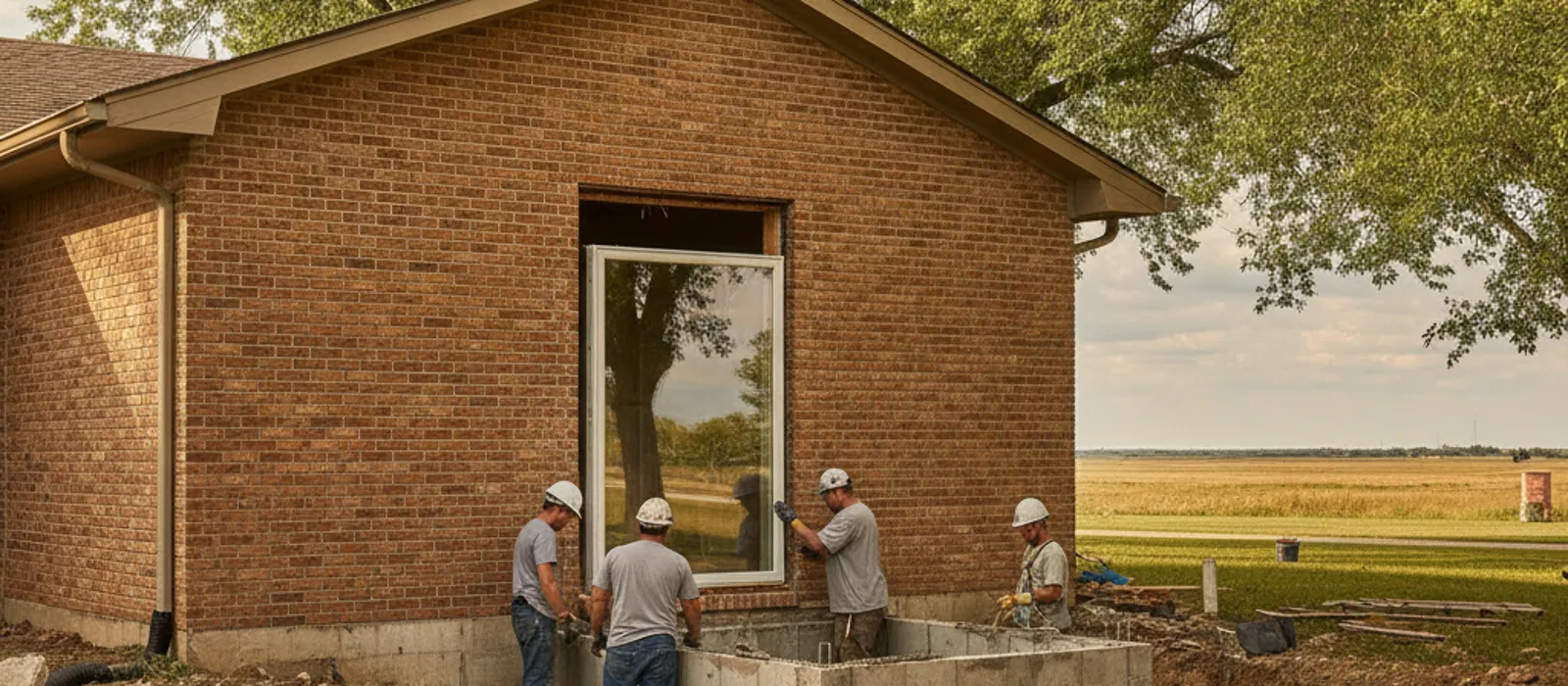
Marcus in Hickman didn’t think much about the hairline crack running along his window well wall until March, when snowmelt poured straight through it and soaked the drywall in his newly finished basement. That crack didn’t appear overnight. It was freeze thaw window well damage, built up slowly over a few Nebraska winters of water pushing and pulling at the steel and soil around his basement window.
If you live anywhere in Lincoln, Waverly, Seward, or the rest of Southeast Nebraska, your window wells go through the same punishing cycle every year. Water seeps into small gaps, freezes, and expands. It thaws a few days later, and the cycle starts again with the next cold snap. Multiply that by dozens of freeze-thaw swings each winter and you end up with bowed walls, cracked covers, and drains that stop working right when you need them most.
The good news is that this kind of damage is predictable, and it’s preventable if you catch it early. If you’re already seeing cracks, gaps, or standing water around your window well, don’t wait for a heavy spring rain to find out how bad it is. Get in touch with our team or call (402) 261-0485 for a free written estimate before the next thaw does more damage.
What Happens During a Nebraska Freeze-Thaw Cycle
Nebraska’s weather doesn’t do winter gently. A day in the 40s can drop into the single digits by nightfall, and that swing can happen a dozen times or more between November and March. The National Weather Service office that covers Lincoln tracks these rapid temperature swings every winter, and they’re a normal part of our climate, not a rare event. Each swing forces moisture in the soil, in cracks, and in construction joints to freeze and expand by roughly 9 percent, then thaw and contract again.
That expansion is called frost heave, and it’s strong enough to lift sidewalks, crack foundations, and buckle window well walls. Frost depth in the Lincoln area typically reaches down 30 to 40 inches in a cold winter, according to regional data from the University of Nebraska-Lincoln’s Institute of Agriculture and Natural Resources, which studies soil freezing and its effects on structures and drainage. Window wells sit right in that active freeze zone, which is exactly why they take so much abuse.
A single freeze-thaw cycle won’t crack a steel well or split a window frame. It’s the repetition that does it. Year after year, the same joints and welds get stressed a little more until something finally gives.
Warning Signs of Freeze-Thaw Window Well Damage
You don’t need to be a contractor to spot early freeze-thaw window well damage. Walk around your foundation on a mild day and look for these signs:
- A well wall that leans, bulges, or looks bowed compared to the foundation
- Cracks or splits in a corrugated metal or polycarbonate cover
- A visible gap opening up between the well and the foundation wall
- Rust streaks or flaking paint at the seams of a metal well
- Standing water, mud, or ice buildup at the bottom of the well
- A basement window that sticks, won’t seal, or lets in a draft
Any one of these on its own might not be urgent. Two or three together usually mean the freeze-thaw cycle has been working on that well for a while.
Mini-Story: A Bowed Wall in Waverly
Denise, who lives on a quiet street in Waverly, noticed her galvanized steel window well had started leaning away from the house after a rough January. The wall had bowed almost two inches at the top, and rust had started eating through the bottom seam.
She caught it before it failed completely, which kept the repair simple. A full window well replacement ran her about $1,100, well within the typical $600 to $1,500 range for this kind of job in the Lincoln area. Had she waited another season, the bowing wall could have pulled away from the foundation enough to let soil wash in against her basement window.
How Frost Heave Cracks Covers, Frames, and Drains
Freeze-thaw damage doesn’t stop at the well wall. It works on every part of the system.
Covers. Cheaper plastic and older polycarbonate covers get brittle in cold weather. When ice forms on top and then thaws, the repeated flexing cracks the plastic at the mounting points first. Once a cover is cracked, more water gets into the well, which feeds the next freeze cycle. Our guide on cracked window well cover replacement covers what to look for and when a $150 to $600 replacement makes more sense than a patch job.
Window frames. Ice that forms in the gap between an egress window frame and the rough opening can pry the frame away from the foundation a fraction of an inch at a time. Over several winters that gap widens, seals fail, and water starts tracking into the basement around the frame instead of just the well.
Drains. Window well drains rely on gravel and a clear line to daylight or a sump. When ice forms in that gravel bed or freezes solid in the drain line, meltwater has nowhere to go. It backs up against the window instead. If your well already struggles to drain, our post on bowing window well walls explains how trapped water pressure makes the structural damage worse, not just the drainage problem.
Why Lincoln’s Clay Soil Makes It Worse
Southeast Nebraska sits on heavy clay soil, and clay holds water differently than sand or loam. It soaks up moisture like a sponge, then swells when that moisture freezes. Sandy soil drains faster and moves less.
That’s a problem for window wells because most of them are backfilled with whatever soil came out of the hole, not clean gravel. Water sits against the well wall, freezes, and pushes outward with real force. The same freeze-thaw cycle that might cause minor movement in sandy soil can shove a clay-backfilled well wall inches out of place over several winters.
This is also why a properly built well with a gravel drainage bed behind it holds up so much better than one that was just dropped into a dirt hole. If your well was installed years ago without gravel backfill, it’s more likely to show freeze-thaw window well damage sooner than a newer, properly drained one. A window well installation done right the first time accounts for Lincoln’s clay from the start.
Repair or Replace After Freeze-Thaw Window Well Damage
Not every crack means a full replacement. The table below shows what we typically see and what it tends to cost to fix in the Lincoln area.
| Damage Observed | Likely Cause | Typical Cost Range |
|---|---|---|
| Small cracks or warping in the cover | Repeated freeze-thaw flexing | $150 - $600 (cover replacement) |
| Bowed, leaning, or rusted-through well wall | Frost heave pressure on the well | $600 - $1,500 (well replacement) |
| Leaking or misaligned window frame in a sound opening | Ice prying at the frame seal | $1,200 - $3,000 (egress replacement, existing opening) |
| Older basement window swapped for a tighter unit | Frame no longer seals against frost | $400 - $1,200 (basement window swap) |
| Well and opening both failed after years of damage | Long-term undetected freeze-thaw cycles | $3,500 - $7,000 new cut-in ($5,500 - $9,500 with well and finishing) |
A Lincoln building permit for egress work typically runs $75 to $200 on top of the installation cost. If you’re not sure which category your situation falls into, a free estimate will tell you in about 20 minutes. Call (402) 261-0485 to get one scheduled.
How to Protect Your Window Well From Freeze-Thaw Damage
You can’t stop Nebraska winters from swinging between thaw and freeze, but you can control how much water gets into your window well in the first place. Less water in the well means less freeze-thaw pressure on the walls, cover, and frame.
- Keep gutters and downspouts pointed away from the well. Roof runoff dumped near a window well is one of the biggest causes of ice buildup at the base.
- Check the grading around your foundation. Soil should slope away from the house, not toward the well.
- Clear leaves and debris before the first freeze. A clogged drain bed freezes solid faster than a clean one. Our window well drainage maintenance checklist walks through a 15-minute fall routine that catches most problems early.
- Install a well-fitted, sealed cover. A cover that actually seats against the well rim keeps snowmelt and rain from pooling inside in the first place.
- Inspect after the first hard freeze and again in early spring. Damage from frost heave usually shows up right when the ground starts to thaw.
Mini-Story: Prevention Pays Off in Beatrice
Ray, who owns an older ranch home in Beatrice, started noticing water pooling in his window well every time it rained hard. Rather than wait, he had the drain bed cleaned out and the grading around his foundation corrected for about $400.
Two winters later, his neighbor down the street ended up replacing a fully rusted-through well wall for $1,400 after ignoring the same warning sign. Ray’s well is still doing fine. Catching drainage problems before winter is almost always cheaper than fixing what the freeze-thaw cycle does to standing water.
When to Call a Professional
Clearing leaves out of a drain bed or swapping a cracked cover are reasonable DIY jobs for most homeowners. Freeze-thaw window well damage that involves any of the following is not:
- Cutting or modifying concrete around the foundation
- A window well wall that has visibly separated from the foundation
- Structural cracks in the foundation itself, not just the well
- Any electrical work near a wired well light or exterior outlet
Getting these wrong risks water intrusion, foundation movement, or a code violation that shows up later at closing if you sell the house. A basement bedroom without a properly sealed, code-compliant egress window and well isn’t legal to advertise as a bedroom in Lincoln, and buyers’ inspectors will catch it. If the frame itself has been pried loose or damaged by ice, egress window replacement in the existing opening is often faster and less disruptive than a full re-cut. If any of these apply to your home, request a free written estimate and we’ll tell you honestly whether it’s a repair or a replacement.
Frequently Asked Questions
How do I know if my window well damage is from freeze-thaw cycles specifically?
Look for damage that lines up with the timing of winter and early spring, like new cracks appearing after a hard freeze or a wall that bows more each year. Rust at seams, cracked covers, and gaps that widen seasonally are classic freeze-thaw signs rather than one-time impact damage.
Can freeze-thaw damage to a window well cause basement flooding?
Yes. A cracked well wall or a clogged, frozen drain forces water to pool against your foundation and basement window instead of draining away. Once spring rain and snowmelt add volume, that trapped water often finds its way through even a small gap.
Is it cheaper to repair a window well or replace it after frost damage?
Small cracks in a cover or minor rust are usually worth repairing, often for $150 to $600. Once a wall is bowed, badly rusted, or separated from the foundation, replacement at $600 to $1,500 is typically the better long-term value since a compromised wall will keep failing every winter.
How often should I inspect my window well for freeze-thaw damage?
Check it at least twice a year: once in late fall before the ground freezes and once in early spring as it thaws. Those two windows are when frost heave pressure is highest and when new cracks or drainage problems are easiest to spot.
Freeze-thaw window well damage rarely announces itself all at once. It shows up as a small crack, a slight lean, or water that takes a little longer to drain than it used to. Catching it in that early stage usually means a $150 to $600 fix instead of a multi-thousand-dollar rebuild. If you’ve noticed any of the warning signs above on your Lincoln, Waverly, Hickman, Seward, Crete, Beatrice, or Ashland home, call (402) 261-0485 or reach out here for a free written estimate.