
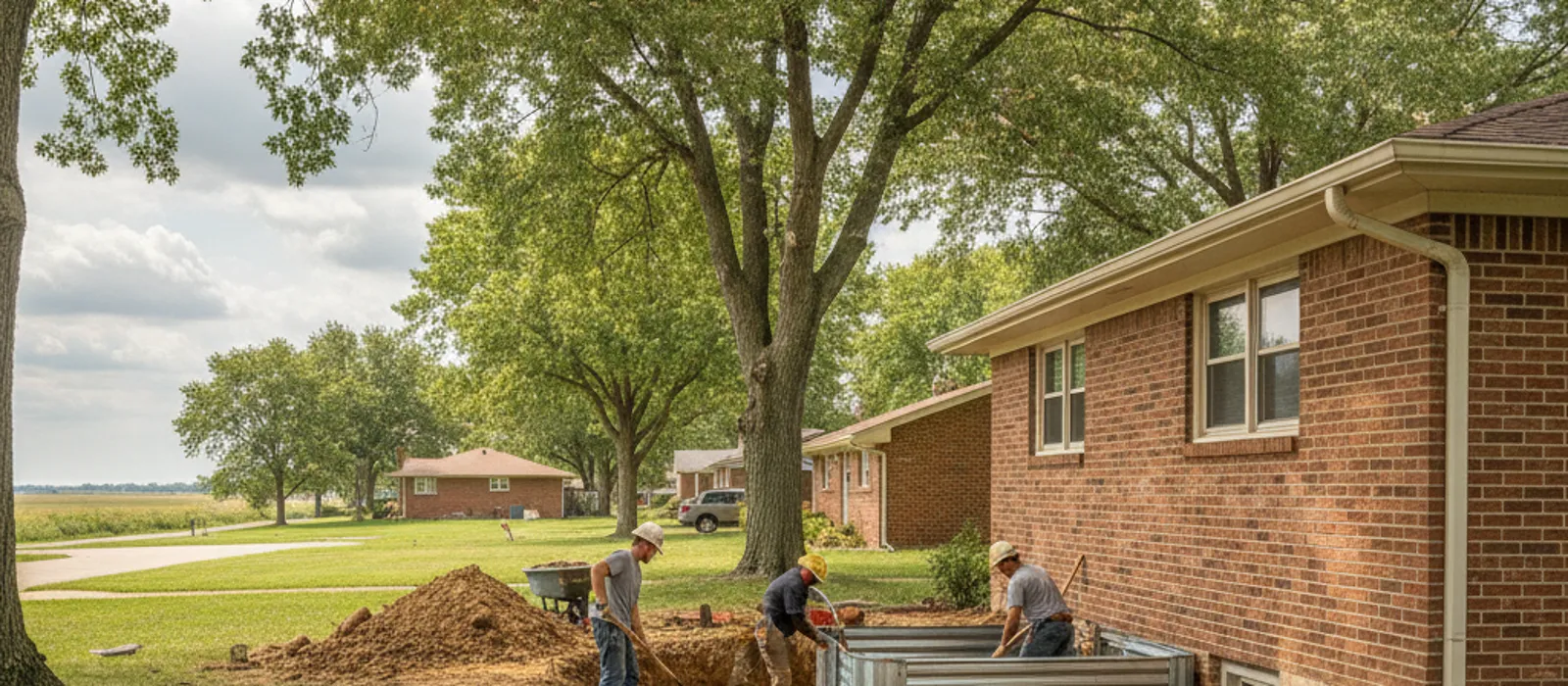
A clogged window well drain can turn a heavy spring storm into two inches of standing water against your basement wall in under an hour. If that water finds a gap in the seal, you’re looking at a wet carpet, a ruined mattress, or worse, mold creeping up the drywall. This window well maintenance checklist walks you through exactly what to check, when to check it, and how to keep water moving away from your foundation instead of pooling next to it.
Lincoln’s clay-heavy soil and freeze-thaw winters make window wells work harder than most homeowners realize. A well that drains fine in July can be a bathtub by March once the gravel bed compacts and the drain line silts up. Twenty minutes of maintenance a few times a year is cheaper than a wet-basement cleanup, and it’s a lot cheaper than replacing a rusted-out well or a warped egress window frame.
Below is the full checklist, broken down by season, plus the warning signs that mean it’s time to stop DIYing and call in a professional.
Why Window Well Drainage Matters More Than You Think
Every window well has one job beyond holding back dirt: get rain and snowmelt away from your window and foundation before it becomes a problem. Most wells rely on a gravel bed over a drain that ties into your foundation drain tile or daylights somewhere on the property. When that path gets blocked, water has nowhere to go but up and in.
For a basement bedroom, this isn’t just a nuisance. Nebraska’s residential code requires a functioning egress window and well for any basement sleeping room, and an egress well that floods regularly can compromise the window seal over time, which is exactly the kind of defect a home inspector flags during a sale. If you’re weighing whether your basement even needs one, our guide on do-i-need-a-window-well breaks down when a well is required versus optional.
If you’re already seeing water in your well after every rain, don’t wait. Call us at (402) 261-0485 or request a free estimate and we’ll walk you through whether it’s a drainage fix or a bigger issue.
The Core Window Well Drainage Maintenance Checklist
This is the baseline routine every window well in Lincoln and the surrounding counties needs, regardless of season.
- Clear debris weekly during leaf drop and after storms. Leaves, grass clippings, and windblown trash sit on top of the gravel and block the cover’s drainage gaps.
- Check the gravel bed for compaction. Push a stick or screwdriver into the gravel. If it stops within an inch or two, the bed has compacted and needs to be loosened or topped off.
- Test the drain itself. Pour a five-gallon bucket of water into the well and time how long it takes to disappear. Anything over 15-20 minutes means a partial clog.
- Inspect the cover for cracks or gaps. A cracked polycarbonate cover lets rain in faster than the drain can handle it. See our notes on cracked-window-well-cover-replacement if yours is chipped or bowed.
- Look at the well wall for rust, bowing, or separation from the foundation. Corrugated steel wells rust from the inside out, and a bowing wall is a structural warning sign, not a cosmetic one.
- Check the window seal and frame for water staining. Staining at the bottom corners of the frame usually means water has been sitting against the glass longer than it should.
- Confirm the grading around the well slopes away from the house. Even a well-maintained drain can’t keep up if soil is directing extra runoff straight at the window.
Seasonal Window Well Maintenance Checklist
Different seasons stress different parts of the system. Here’s how to split the checklist across the year.
| Season | Priority Tasks | Time Needed |
|---|---|---|
| Spring | Clear winter debris, test drain flow with a bucket, check gravel compaction after freeze-thaw cycles | 30-45 min per well |
| Summer | Weekly debris checks, inspect cover for UV cracking, trim back plants growing into the well | 10-15 min per visit |
| Fall | Install or clean leaf guards, do a deep gravel refresh before leaves start falling in volume | 30-60 min per well |
| Winter | Clear snow load off covers, check for ice damming at the drain outlet, watch for frost heave along the well wall | 15-20 min per visit |
Spring is the season that catches most Lincoln homeowners off guard. Our post on spring-window-well-flooding-prevention goes deeper into why snowmelt on still-frozen ground overwhelms wells that were fine all winter.
Real Situations from Around Southeast Nebraska
Waverly: A homeowner named Dana noticed her basement guest room smelled musty every April but never saw standing water. It turned out her window well drain had silted in over two winters, and water was seeping through hairline gaps in the foundation seal instead of pooling visibly. A drain clean-out and gravel refresh solved it for under $300. If she’d waited another season, the fix likely would have been closer to a full window well replacement at $600-$1,500.
Hickman: Marcus had a corrugated steel well installed nearly two decades ago that had started rusting through at the base. He’d been patching the rust spots himself, but the wall had begun bowing outward under soil pressure. We replaced the well with a heavier-gauge steel unit for around $1,100, well within the typical $600-$1,500 range, and it solved both the rust and the bowing in one visit. His original DIY patches had only masked the problem for about a year.
Crete: Renata was preparing to sell her house and a home inspector flagged water staining on her basement bedroom’s egress window frame. The well drain was clogged with years of compacted leaf litter, and moisture had been sitting against the frame long enough to warp it slightly. Because the window itself was still sound, a drain clean-out plus a $450 basement window swap on the frame got her through inspection without a full egress replacement.
Three different problems, three different price points, and all of them started as small drainage issues that got ignored for too long. Ready to get ahead of yours? Get a free written estimate or call (402) 261-0485 and we’ll take a look before it turns into a bigger repair.
Window Well Drainage Problems vs. What They Usually Mean
| What You See | Likely Cause | Typical Fix |
|---|---|---|
| Water sits for over 20 minutes after rain | Clogged or silted drain | Drain clean-out, gravel refresh |
| Standing water plus a musty basement smell | Seepage through a compromised seal | Seal repair or window replacement |
| Rust streaks or flaking on the well wall | Corroding steel well | Well replacement, $600-$1,500 |
| Well wall bulging or pulling from the foundation | Soil pressure or a failing wall | Well replacement, sometimes with drainage upgrade |
| Cracked or sagging cover | UV damage or age | Cover replacement, $150-$600 |
| Water inside near the window frame | Window seal failure | Egress replacement in existing opening, $1,200-$3,000 |
For more detail on the mechanics of how these systems are supposed to work, our guide on how-window-well-drainage-works covers the gravel-and-drain setup from the ground up.
Freeze-Thaw Cycles and Lincoln’s Clay Soil
Southeast Nebraska sits in a freeze-thaw belt that’s rough on anything buried in the ground, including window well drain lines and gravel beds. Water that seeps into small gaps in compacted gravel expands when it freezes, which shifts soil and can crack drain pipe joints over a single hard winter. The National Weather Service’s Omaha/Valley office tracks Lincoln’s freeze-thaw pattern closely, and repeated cycles between November and March are typical for our area, which is part of why a fall gravel refresh matters so much before the ground locks up.
Standing water that never fully drains is also a stormwater management issue on a small scale. The EPA’s Soak Up the Rain program has useful background on why grading and drainage around a home matter for keeping water away from foundations, the same principle that applies to a window well’s gravel bed and drain line.
Clay soil compounds the issue because it drains far slower than sandy or loamy soil, so water that isn’t captured by a functioning drain has almost nowhere else to go. If your well was installed without enough gravel depth or a proper drain tie-in, freeze-thaw cycles will expose that shortcut within a year or two. We cover this in more depth in nebraska-freeze-thaw-window-well-damage.
When to Stop DIY and Call a Professional
Most of this checklist is safe and simple for any homeowner to handle. But a few situations call for a professional, and pushing forward on your own can turn a moderate repair into an expensive one.
- The well wall is bowing, cracked, or separating from the foundation. This is a structural issue, not a maintenance one.
- Water is getting past the window seal and into the house. That usually means the frame or glazing has failed, not just the drain.
- The drain line needs to be dug up or rerouted. This often involves cutting into landscaping or, in some cases, concrete near the foundation, which isn’t a weekend project.
- You smell sewage or see water backing up from inside the drain. That can mean a tie-in problem with your foundation drain tile, which needs a licensed contractor.
- Anything involves electrical conduit or wiring near the well, such as low-voltage well lighting that’s been damaged by water. Don’t troubleshoot live wiring near standing water.
If you’re not sure which category your well falls into, a quick call costs nothing. Reach us 24/7 at (402) 261-0485, especially if you’re facing a closing deadline or a flooded well that needs same-day attention.
Building Maintenance Into Your Routine
The homeowners who never deal with a flooded window well are almost always the ones who check their wells on a schedule instead of after a problem shows up. Set a phone reminder for the first weekend of March, June, September, and December. Walk out with a five-gallon bucket, pour it in, and time the drain. It takes less time than mowing the lawn.
If you’re installing a new well or replacing an aging one, ask about drainage capacity up front instead of treating it as an afterthought. Our window-well-installation-lincoln page covers what a properly drained well setup looks like for Lincoln soil conditions, and our egress-window-replacement-lincoln page has details if the window itself, not just the well, needs attention.
A well-maintained window well protects more than your basement floor. It protects the legality of a basement bedroom, the resale value of your home, and the few thousand dollars you spent getting the egress window installed correctly in the first place.
Frequently Asked Questions
How often should I check my window well drainage?
Check debris and cover condition weekly during spring and fall when leaves and storms are most active. Do a full drain test with a bucket of water four times a year, once each season, and after any unusually heavy rain or snowmelt event.
What’s the fastest way to tell if my window well drain is clogged?
Pour a five-gallon bucket of water into the well and watch how fast it drains. If water is still standing after 15-20 minutes, or if it doesn’t visibly go down at all, the drain is clogged or the gravel bed has compacted and needs attention.
Can I clean a window well drain myself, or do I need a professional?
Clearing surface debris and refreshing the top layer of gravel is safe DIY work. If the clog is deeper in the drain line, involves digging near the foundation, or the well wall shows rust or bowing, call a professional so you don’t risk foundation or window seal damage.
Does poor window well drainage affect my home’s resale value?
Yes. Home inspectors routinely flag water staining, standing water, or a rusted well during a sale, and a basement bedroom with a non-functioning egress well can raise questions about code compliance. Keeping the well maintained protects both the window and your negotiating position at closing.
Ready to get your window well drainage checked before the next storm? Call Lincoln Egress Windows at (402) 261-0485 or request your free written estimate today.