
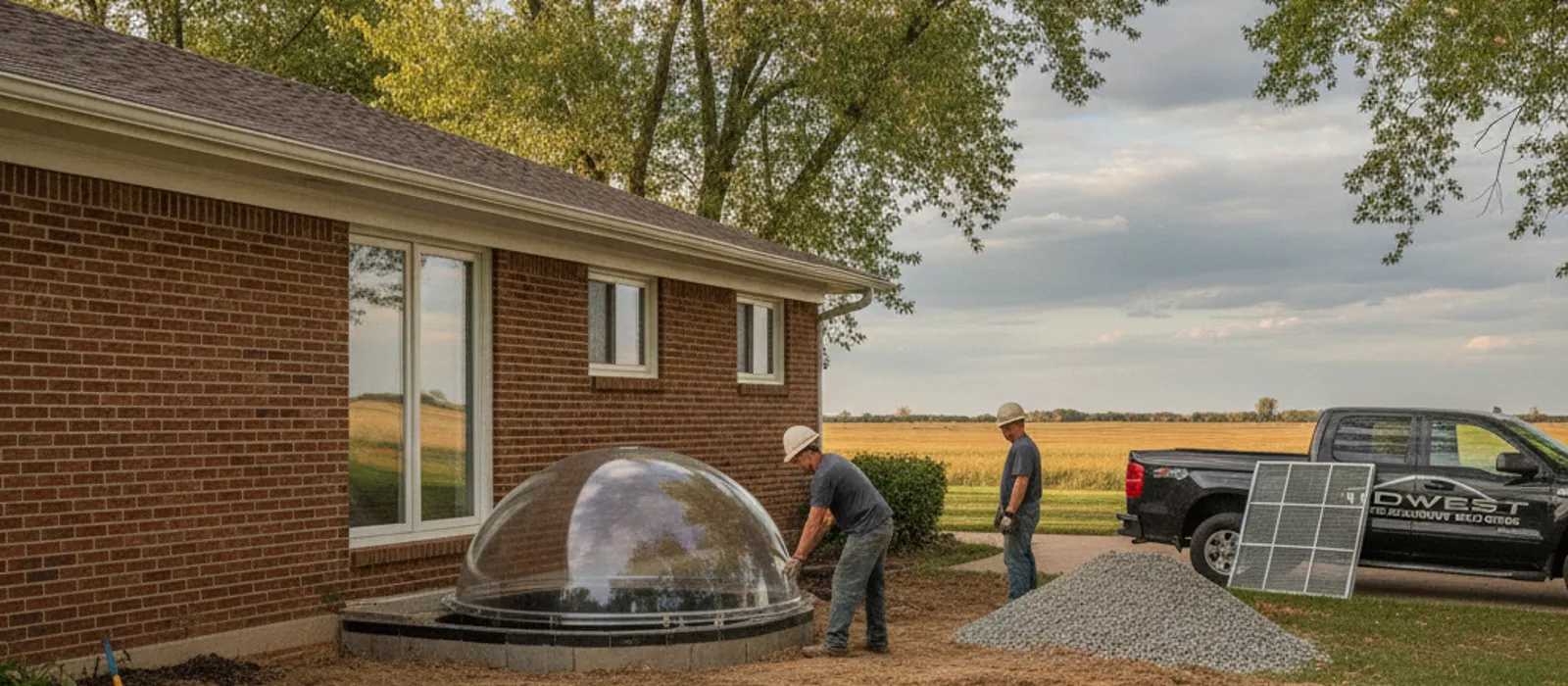
Picture this: a bag of leaves, three inches of April slush, and a curious dog all landing in your basement window well before breakfast. A cover stops that mess before it starts, but not every cover is built for Nebraska weather or a kid running across your yard. Choosing among window well cover types isn’t just about looks. It’s about drainage, safety, and whether the cover still lets you climb out in an emergency.
Homeowners across Lincoln, Waverly, and Seward ask us the same question almost every week: which cover actually fits my well and my budget? The honest answer depends on your well’s shape, how much foot traffic your yard sees, and whether the well sits under an egress bedroom window. Below, we’ll walk through the real options, what they cost, and how to pick one that won’t crack or cave in by next winter.
If you already know your well needs work beyond a cover, our team offers free written estimates and can look at the whole system in one visit. Call (402) 261-0485 or reach out through our contact page any time.
Why the Right Window Well Cover Matters More Than You Think
A window well cover does three jobs at once. It keeps leaves, snow, and rain out of the well so the drain doesn’t clog. It keeps kids and pets from falling into a hole that can be three or four feet deep. And on an egress well, it has to pop open from the inside without a key or a wrestling match.
Skip the cover, or buy the wrong one, and you’ll deal with soggy window frames, a musty basement smell, or worse. We’ve replaced more than a few window frames that rotted because a well filled with standing water for two winters straight. A $150-$600 cover is cheap insurance against that kind of repair bill.
Nebraska’s freeze-thaw cycles are hard on covers too. Cheap plastic gets brittle in a January cold snap and can shatter under a snow load it handled fine in November. That’s why picking the right window well cover types for your climate matters as much as picking the right size.
There’s also a resale angle worth keeping in mind. Home inspectors routinely flag missing or damaged window well covers, especially on wells serving a basement bedroom. A buyer’s agent who sees a cracked cover or an open well often reads it as a sign the rest of the house hasn’t been maintained, even if that’s not true. A $200 replacement cover can head off an awkward negotiation later.
Window Well Cover Types: A Quick Comparison
Most Lincoln homes end up choosing between four basic styles. Here’s how they stack up.
| Cover Type | Typical Cost | Walk-On Rated? | Best For |
|---|---|---|---|
| Flat polycarbonate | $150-$300 | No | Budget wells, low foot traffic |
| Bubble/dome polycarbonate | $180-$350 | No | Deep wells needing extra clearance |
| Metal grate (bar grate) | $250-$500 | Yes | Yards with kids, pets, or mowing near the well |
| Custom-fit (odd-shaped or oversized wells) | $350-$600 | Depends on build | Bay windows, curved wells, non-standard sizes |
Prices vary with well size and whether you need a locking or egress-compliant model. A standard 39-inch well is on the low end; a wide well under a bay window egress opening runs higher.
Flat and Bubble Polycarbonate Covers
These are the covers most people picture: clear or tinted plastic domes that snap onto a metal frame. Flat covers sit low and work fine on shallow wells. Bubble covers arch upward, which gives you a few extra inches of clearance if your well is deep or you want more natural light reaching the basement window.
Polycarbonate is UV-resistant and won’t rust, which is a real advantage over painted metal. The tradeoff is that it’s not rated to hold weight. Step on one, or let a dog jump on it repeatedly, and it can crack or punch straight through. In an egress well, a cracked cover still has to release cleanly if someone needs to climb out, so a spiderwebbed or warped one should get swapped before it fails during an emergency.
We replaced a bubble cover for Marcus in Waverly last October after three winters of heavy snow load finally split the plastic down the seam. His well sits right under his son’s bedroom window, a full egress setup, so we didn’t just patch it. We swapped it for a properly sized dome rated for his well’s width, and the whole job ran $310 including the frame.
Metal Grate (Walk-On) Covers
If your window well sits near a mower path, a play area, or a spot where the dog patrols the fence line, a walk-on rated metal grate is worth the extra cost. These are welded steel or aluminum bar grates that can support a person’s weight without collapsing. They’re the closest thing to a guaranteed no-fall-in cover.
The downside is weight and appearance. Grates are heavier to lift off for well cleaning, and some homeowners find the bar pattern less attractive than a clear dome. Powder-coated aluminum resists rust better than bare steel, which matters here given how many freeze-thaw cycles Nebraska wells go through each winter.
In Beatrice, a family called us after their toddler’s play set ended up positioned a few feet from an uncovered well. We measured, ordered a walk-on rated grate sized for their egress well, and installed it along with a quick check of the well’s drainage gravel. Total came to $480, and it’s the kind of job that pays for itself the first time someone forgets the well is there.
Need a broader look at how your whole drainage system holds up, not just the cover? Our window well installation team can inspect the gravel bed, drain line, and cover together in one visit, and you can book that through /#contact.
Custom-Fit Covers for Odd-Shaped Wells
Not every well is a simple half-circle. Bay window egress openings, corner wells, and older galvanized wells installed decades ago often don’t match a standard size off the shelf. For those, a custom-fit cover is measured and built (or specially ordered) to match the exact width, depth, and curve of your well.
Custom covers cost more, generally $350-$600, because they’re not mass-produced. But an ill-fitting cover is often worse than no cover at all. Gaps let water and debris in around the edges, and a cover that doesn’t seat properly can shift or blow off in a windstorm, leaving the well wide open.
Older galvanized wells in Lincoln’s established neighborhoods, the kind installed in the 1960s and 1970s, are a common custom-fit case. Decades of settling can pull a well slightly out of round, and manufacturers didn’t standardize sizes back then the way they do now. If your well predates the house’s last remodel, it’s worth having someone measure it in person rather than guessing off a tape measure and a catalog listing.
Denise in Seward has an older bowed metal well under a bay-style egress window, a shape that no standard cover would seat against. We measured it during a routine egress window installation visit and had a custom polycarbonate cover fabricated to match the curve. It ran $540, more than a standard bubble cover, but it finally stopped the puddling she’d fought for two rainy seasons.
How Lincoln’s Freeze-Thaw Cycles Wreck the Wrong Cover
Southeast Nebraska doesn’t hold one steady winter temperature. It swings from a 40-degree thaw to single digits and back within a week, sometimes within days. That cycle is brutal on anything sitting outdoors, and window well covers take the brunt of it.
Snow melts on a cover during the day, refreezes at the edges overnight, and the ice works into any hairline crack in the plastic. By February, a cover that looked fine in November can be riddled with stress fractures. Metal grates handle the cycle better structurally, but bare steel frames can still rust at the welds if the coating wears thin.
If your cover already has cracks, foggy discoloration, or a section that’s started to sag, don’t wait for a hard freeze to replace it. See our post on cracked window well cover replacement for signs it’s time to swap rather than patch. A cover that fails mid-winter often means a well full of snowmelt by spring, and that water has nowhere to go but toward your foundation. Our guide on how window well drainage works covers what happens once water gets past a bad cover or a clogged drain.
Choosing the Right Window Well Cover for Your Home
Start with the well itself. Measure the width and depth, and note whether it’s a standard shape or something custom. Then think about how the space around it gets used. A well tucked behind shrubs with no foot traffic can usually get by with a standard bubble cover. A well near a play area, patio, or mowing path needs a walk-on rated grate.
If the well sits under an egress bedroom window, the cover has to release from inside without tools, every time, even in winter. That’s a code requirement, not just a nice-to-have, since a stuck or frozen cover can turn a legal bedroom into a trap during a fire. Anything involving cutting into concrete, reworking the well’s anchor points, or structural repairs to a bowing well wall is a job for a licensed contractor, not a weekend project.
A few quick guidelines:
- Match the cover width to your well’s outer frame, not the window opening.
- Choose walk-on rated grates for any well within reach of kids, pets, or lawn equipment.
- Replace cracked or warped covers before the first hard freeze, not after.
- Confirm the cover still allows quick, tool-free release if the well serves an egress window.
If you’re not sure which window well cover types fit your situation, send us a photo and a rough measurement and we’ll point you toward the right option, often before we even schedule a visit. Reach the team at (402) 261-0485 or through /#contact.
Frequently Asked Questions
Do window well covers have to be clear?
No, but clear or tinted polycarbonate lets daylight reach the basement window, which matters if that room is a bedroom. Metal grates block more light but hold up better under foot traffic. Pick based on how the space near the well gets used, not just looks.
Can I install a window well cover myself?
Standard flat or bubble covers on a normal-sized well are a reasonable DIY project for most homeowners. Custom-fit covers, or any well that needs frame repair, welding, or anchoring into concrete, are better left to a contractor who can make sure the fit is airtight and code-compliant.
Will a cover stop my window well from flooding?
A good cover keeps out rain and snowmelt, which is most of what floods a well. But if the drain underneath is clogged or the gravel bed has settled, water can still back up. Check out our post on a clogged window well drain if you’re dealing with standing water even with a cover in place.
How much does a walk-on rated window well cover cost in Lincoln?
Most walk-on rated metal grate covers run $250-$500 installed, depending on the well’s size and whether the frame needs any repair first. Custom or oversized wells can run higher. A standard flat or bubble polycarbonate cover, by comparison, typically costs $150-$350.
Choosing among window well cover types comes down to matching the cover to how your well gets used and how Nebraska weather treats it. For local permit and code specifics on egress wells, the City of Lincoln Building & Safety Department is the authority of record, and the Consumer Product Safety Commission’s guidance on window well hazards is a useful safety reference. If you’d rather skip the research and just get a straight answer for your well, Lincoln Egress Windows offers free written estimates across Lincoln, Waverly, Hickman, Seward, Crete, Beatrice, and Ashland. Call (402) 261-0485 or fill out the form at /#contact.